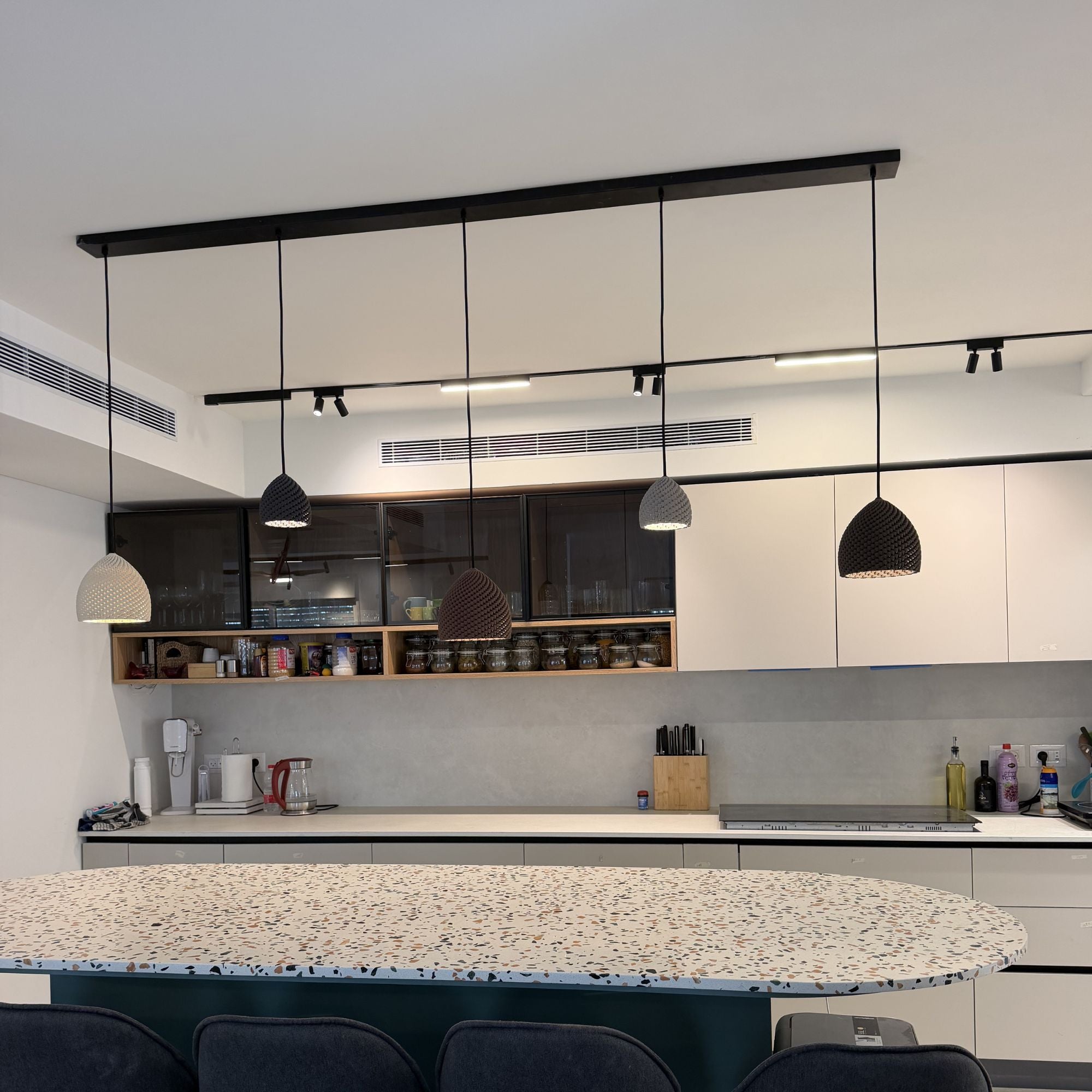
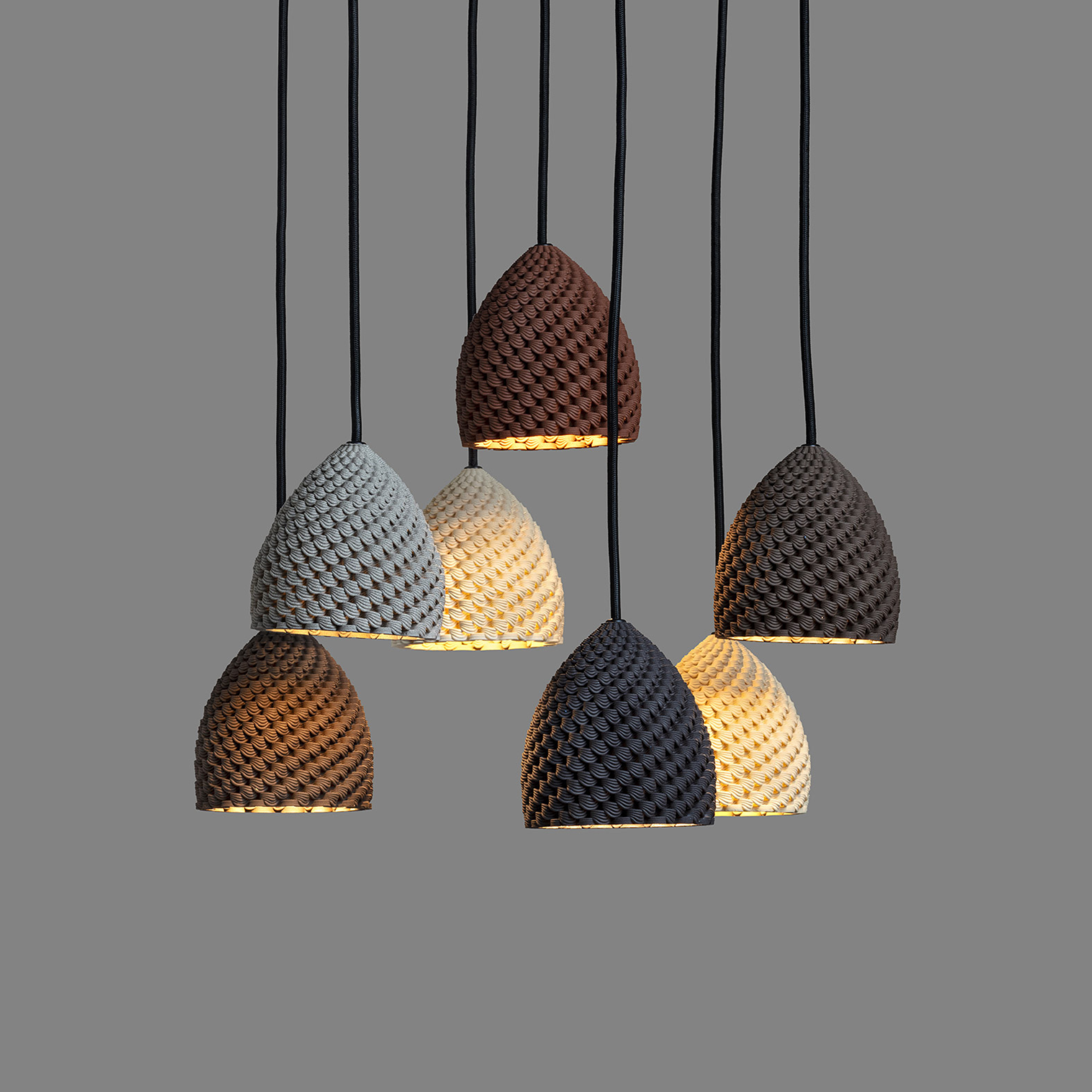
Unique pendant lights are ceiling fixtures with a distinctive design - pieces that aren’t mass-produced on a factory line - and their job is twofold: to light a space and to give it a focal point. The right choice shapes how tall a room feels, the mood of its light, and the character of the whole area beneath the fixture. This guide covers everything worth knowing before you choose: hanging height, proportion, materials, light distribution, and what actually makes a pendant "unique." It draws on our work at Melzer Studio, where we design and make unique ceramic pendant lights using 3D clay printing. What makes a pendant light unique? A unique pendant light differs from an ordinary fixture in three ways: non-industrial production, a material with real presence, and a distinctive interaction with light. A piece made by hand or in a small batch carries subtle variations that can’t be replicated on an assembly line - and that is exactly what turns it into a design object rather than just a light source. The material sets the character of the light. Ceramic and porcelain diffuse a warm, soft glow through their texture, while metal or smooth glass focus the light and bounce highlights. When the shade’s texture is sculptural - like the printed layers of a 3D clay printed shade - the light itself gains depth, shadow, and movement. That’s the difference between a fixture that lights a room and one that designs it. Five rules for choosing a designer pendant light 1. Hanging height: over a dining table or kitchen island, the bottom of the shade should sit 30-36 inches (75-90 cm) above the surface. In an open walkway where people pass beneath it, leave at least 7 feet (210 cm) of floor clearance. 2. Proportion: over a table, the fixture’s width (or the combined width of a cluster) should be roughly one-third to one-half the width of the table. Too small and it gets visually lost; too large and it dominates. 3. Material and finish: choose a material that suits the mood you want - ceramic for warm, diffused light, metal for a focused, industrial look. Notice how the fixture looks switched off, too: a well-designed pendant is beautiful in daylight. 4. Light temperature: for living and dining areas, a 2700K-3000K bulb (warm white) is ideal. A dimmable LED lets you shift the mood across the evening. 5. Single or cluster: one large pendant creates a dramatic focal point; several small shades on a shared canopy form a sculptural array. In tall spaces, staggering shades at different heights fills the volume naturally. A pendant light for every room In the living room, living room pendant lights work best over a defined seating zone - a coffee table or reading nook - rather than the geometric center of the room. The fixture creates a "room within a room" and brings intimacy even to a large space. In the kitchen, kitchen pendant lights over the island serve as both task lighting and a design statement. Ceramic is an excellent choice here: it stands up to heat and humidity and wipes clean easily. Over an island of 5-6.5 feet (1.5-2 m), three to four shades spaced evenly look balanced. In the dining area, dining room pendant lights are the classic use of a pendant: the fixture frames the table, lights the meal, and invites people to linger. Over a round table, a single central pendant; over a long rectangular table, two or three shades along its length. Ceramic, porcelain and stoneware: why the material matters Ceramic is one of the oldest materials in the world - and one of the most contemporary in modern lighting. Thin porcelain transmits light gently and creates a warm glow; stoneware is denser and directs light downward in a more focused way. Both are durable for years, don’t rust or fade, and are easy to maintain. Beyond the physical properties, ceramic has a quality that’s hard to quantify: it’s a living material, with weight and presence, that ages well. A ceramic pendant light doesn’t feel like a product - it feels like an object. How a 3D clay printed pendant light is made At Melzer Studio, every lamp begins as a digital model designed in the studio. A dedicated 3D printer builds the shade layer by thin layer from soft clay - a process that takes hours, and in which the sculptural texture that defines each piece is formed. After printing, the shade dries slowly, is glazed, and is fired in a kiln at high temperature. This combination - digital precision with the natural behavior of clay and a kiln firing - guarantees that no two lamps are ever completely identical. That’s the real meaning of "unique": not strangeness for its own sake, but an object created through a process that can’t be mass-produced. Common mistakes to avoid • Hanging too high: the fixture loses its connection to the table or seating area, and the light glares instead of wrapping the space. • A fixture too small for the table or room: it looks lost instead of working as a focal point. • A bulb too bright with no dimmer: even the most beautiful pendant loses its atmosphere under harsh light. • Ignoring the daytime look: a pendant light is present in the room even when switched off - choose one that looks good that way, too. Frequently asked questions How many pendant lights do I need over a kitchen island? Over an island of 5-6.5 feet (1.5-2 m), three to four pendants are recommended, spaced about 24-32 inches (60-80 cm) apart and hung 30-36 inches (75-90 cm) above the worktop. An odd number of fixtures usually reads as more balanced to the eye. Over a short island or a sink, one or two pendants can be enough. Can I combine pendant lights at different heights? Yes - a cluster of shades at varying heights is one of the most effective ways to create interest in a space, especially in high ceilings or a stairwell. Height differences of 6-10 inches (15-25 cm) between shades create movement without looking random. Keep a common thread - material, color, or shape - so the array reads as one unit. How do I care for a ceramic pendant light? A ceramic pendant light needs almost no maintenance: a soft, dry brush or cloth every few weeks is enough. Before cleaning, switch off the fixture and make sure the bulb has cooled. Avoid abrasive cleaners and liquids - the glaze protects itself. Do Melzer Studio pendant lights ship internationally? Yes - Melzer Studio is based in Israel and ships its handmade ceramic pendant lights worldwide. Each piece is studio-made to order and packed for safe international transit. International orders may be subject to local customs duties and taxes on arrival, which are the buyer’s responsibility. Ready to choose your pendant light? Now that you know what to look for, explore the unique ceramic pendant lights collection at Melzer Studio: each lamp is 3D clay printed, kiln-fired, and arrives with a character of its own. Not sure what fits your space? You can book a consultation and we’ll be glad to help.